


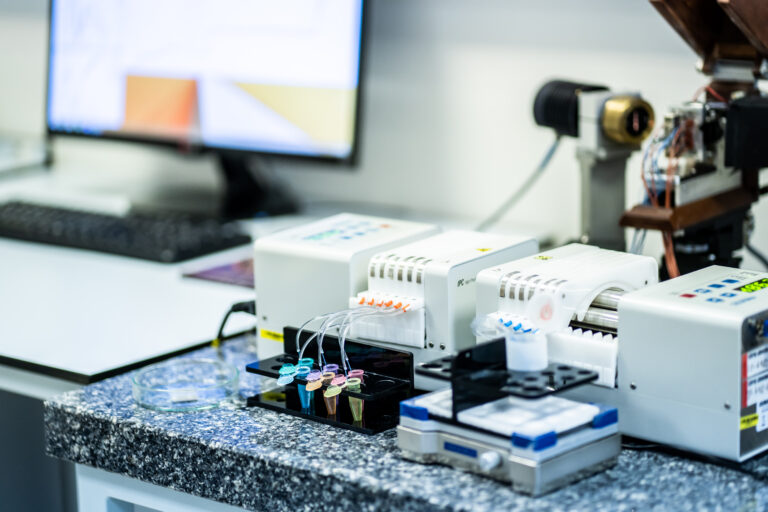
A new generation of biosensors for medical diagnostics
The project, titled “Digital Plasmonic Biosensing toward Next-Generation Medical Diagnostics,” aims to develop innovative methods that enable highly sensitive and reliable detection of biomolecules – biomarkers of oncohematological diseases.
Researchers will develop new approaches in the field of plasmonic imaging and digital analytical methods that will enable the detection of individual molecular events and generate a digital sensor response. An important part of the research will also be the development of special functional coatings with molecular receptors that will enable the effective capture of target molecules while minimizing unwanted interactions with other components of complex biological samples.
Researchers will test new technologies in the field of oncohematology, particularly in the detection of protein and nucleic acid biomarkers associated with myelodysplastic syndromes and acute myeloid leukemia. The goal is to enable their highly sensitive detection directly in blood plasma. The research results may thus contribute in the future to the development of more accurate diagnostic methods for these serious hematological diseases.
The project will be led by Prof. Jiří Homola, Ph.D., DSc., head of the Optical Biosensors research team at the Institute of Photonics and Electronics and an internationally recognized expert in the field of biophotonics and optical biosensors. The Institute of Macromolecular Chemistry of the Czech Academy of Sciences will also participate in the project, with its project team led by Ing. Ognen Pop-Georgievski, Ph.D.
In the EXPRO call, less than eight percent of proposals received funding
EXPRO grants are among the most prestigious forms of support for basic research in the Czech Republic. They are intended for experienced researchers with ambitious research projects that have the potential to significantly advance the frontiers of knowledge. Project selection takes place through a rigorous two-stage evaluation process involving international experts. Five-year projects can receive funding of up to 50 million Czech crowns. This year, only 16 of the 205 proposals submitted were successful in the EXPRO competition, representing a success rate of approximately 7.8 percent. Ten of the funded projects will be carried out by researchers at the Czech Academy of Sciences.
Receiving the EXPRO grant is a significant achievement for Jiří Homola and his team and highlights the internationally recognized quality of research into optical biosensors at the Institute of Photonics and Electronics. The project will also deepen collaboration among the institutes of the Czech Academy of Sciences and open up new opportunities for the research and development of biosensor technologies with the potential to significantly contribute to advances in medical diagnostics.